
Dr. Alex Culbreth is an experienced obstetrician gynecologist based in Valdosta, GA, who has long guided patients through complex reproductive and surgical concerns. Drawing from decades of clinical practice that include leadership roles in regional medical centers and extensive work with robotic assisted gynecologic procedures, Dr. Culbreth provides structured and evidence based care for individuals undergoing infertility evaluation. His background in managing pelvic conditions, performing advanced surgeries, and supporting patients through diagnostic processes informs his approach to the first phase of infertility assessment. As a clinician dedicated to clear communication and patient understanding, he emphasizes how foundational testing and coordinated review set the stage for further decision making. In this context, his work reflects the measured steps that help establish clarity early in the evaluation process.
The First Phase of Infertility Evaluation
For women trying to conceive without success, infertility evaluation typically begins after 12 months of unprotected intercourse, or 6 months if the person is over 35. This timing follows clinical guidance based on how long conception has been attempted and signals when providers begin a step-by-step medical review. The initial visit focuses on collecting facts about reproductive health rather than assigning a diagnosis or predicting outcomes.
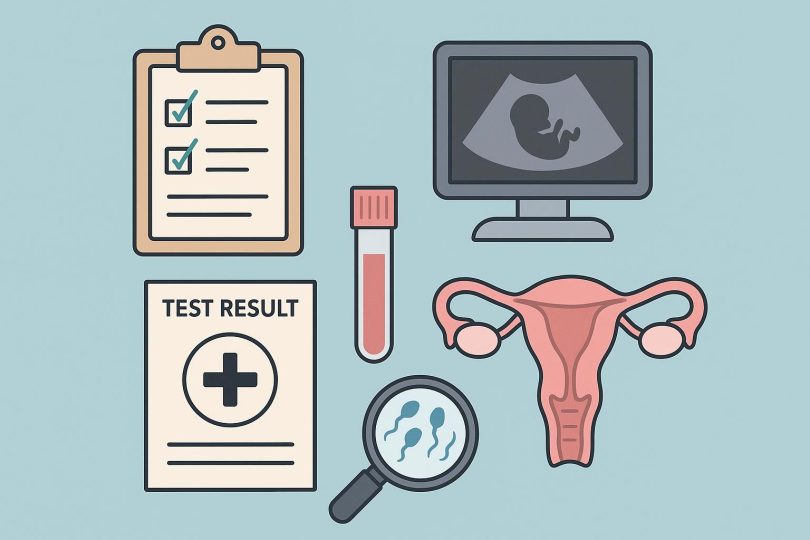
The first appointment usually includes a discussion of menstrual patterns, previous pregnancies, contraceptive history, and the timing and frequency of intercourse. Providers also review medical conditions, prior surgeries, and medications that could influence reproductive function. These details give structure to the evaluation and help decide which tests to begin with.
Clinicians start with hormone testing. They may measure follicle-stimulating hormone, luteinizing hormone, thyroid markers, or anti-Mullerian hormone, depending on symptoms and age. These tests help providers understand cycle behavior and determine whether further monitoring is needed. Clinicians often obtain some tests in the early follicular phase to keep results consistent across cycles.
Clinicians also typically order a semen analysis early in the evaluation. It assesses sperm count, movement, and shape and provides objective information about male fertility factors without invasive procedures. Including both partners at the start helps the evaluation reflect all possible contributors.
Pelvic ultrasound provides a real-time view of the uterus and ovaries. It can identify fibroids, ovarian cysts, and other findings that may affect conception. Clinicians perform this test in an office setting and gain direct insight into reproductive anatomy.
Clinicians may recommend a hysterosalpingogram, or HSG, next. This imaging method uses contrast dye and X-ray technology to show whether the fallopian tubes are open and whether the uterine cavity has any unusual contours. Clinicians schedule the test at a specific point in the cycle and obtain information that ultrasound alone cannot provide.
When ovulation timing is uncertain, clinicians introduce cycle tracking methods. These may include ovulation predictor kits, temperature charting, or ultrasound monitoring. Clinicians use these tools when cycles are irregular or when added timing detail helps align conception attempts with expected fertile windows. When needed, they confirm ovulation with a mid-luteal progesterone blood test.
During the early evaluation, clinicians also review lifestyle habits that patients can change. They assess tobacco exposure, alcohol use, weight-related factors, and exercise patterns and explain how these behaviors can affect attempts to conceive. This discussion focuses on environmental and behavioral influences, and clinicians address medical treatments separately when they become relevant.
When tests occur in multiple settings, clinicians coordinate results among primary care, reproductive endocrinology, urology, and imaging centers. They share reports efficiently to keep the evaluation organized and to avoid duplicate testing. This coordination helps align any follow-up testing with prior findings and prevents unnecessary delays.
Initial findings guide how the evaluation progresses. Some patients complete additional cycle tracking to clarify ovulation patterns, while others undergo further imaging or laboratory testing to explore specific questions raised by earlier results. Clinicians base each action on documented findings and sequence tests accordingly, keeping the evaluation focused on the issues identified during the first phase.
As care advances, the structure of early evaluation provides more than clinical direction – it creates a shared decision-making path during uncertain or changing circumstances. When options shift or timelines evolve, patients and providers can revisit the original findings to determine the most realistic path forward. This continuity strengthens clarity at each transition and helps maintain alignment between goals, results, and timing.
About Alex Culbreth
Dr. Alex Culbreth is an OB GYN based in Valdosta, GA, with extensive experience in reproductive health, robotic assisted surgery, and the management of infertility. He has served in multiple leadership positions within regional medical centers and has long been involved in guiding advanced surgical programs. His clinical work spans pelvic surgery, urinary incontinence treatment, and comprehensive gynecologic care. Outside of clinical practice, he contributes to community and organizational boards and maintains a long standing interest in beekeeping.