
With more than two decades in diagnostic radiology, Damon Deteso brings firsthand clinical perspective to the rapidly evolving intersection of artificial intelligence and medical imaging. Practicing at Millennium Medical Imaging in Saratoga Springs, New York, since 2004, he holds staff positions at five regional hospitals and works with a broad range of imaging modalities including CT, MRI, ultrasound, X-ray, and nuclear medicine. Dr. Deteso also spent three years as a medical advisor with Imagen Technologies, where he consulted on AI interpretations of X-ray images — an experience that provided direct exposure to how AI systems are being developed and deployed in real-world radiology practice. He earned his medical degree from the University of Massachusetts Medical School and holds a physics degree from Holy Cross University.
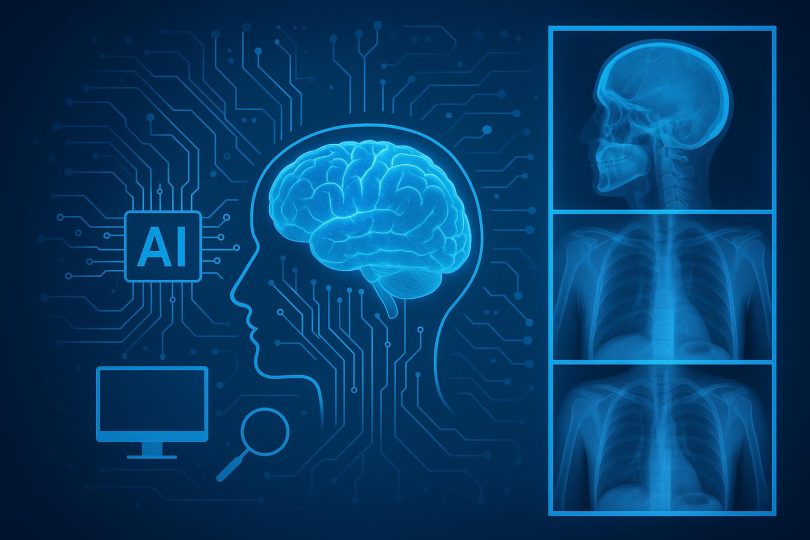
Artificial intelligence (AI) is transforming health care, particularly the field of radiology.
By leveraging advanced algorithms, machine learning, and deep learning technologies, AI is helping radiologists analyze medical images more efficiently, improve diagnostic accuracy, and enhance patient care.
AI systems can be trained to recognize patterns within medical images such as X-rays, computed tomography (CT) scans, magnetic resonance imaging (MRI) scans, and mammograms. These systems can identify abnormalities, such as tumors, fractures, lung nodules, hemorrhages, and other pathological findings. By flagging suspicious areas for review, AI serves as a valuable second set of eyes that helps radiologists detect findings that might otherwise be overlooked.
Breast cancer screening is a notable example of AI’s effectiveness in radiology. AI-powered tools can analyze mammograms and assist in identifying early signs of breast cancer. AI can help improve detection rates while reducing false positives, potentially leading to earlier diagnoses and better patient outcomes. Similar applications are being used in lung cancer screening, where AI algorithms can detect small pulmonary nodules that may indicate early-stage disease.
Radiology departments often face increasing workloads due to rising imaging demands. AI can prioritize cases based on urgency by automatically identifying critical findings such as strokes, pulmonary embolisms, or intracranial hemorrhages. This enables radiologists to review high-priority cases more quickly, reducing delays in diagnosis and treatment. Automated triage systems can improve efficiency and help health care providers deliver timely care to patients with life-threatening conditions.
AI algorithms can improve image quality while reducing scan times and radiation exposure. For example, AI-assisted CT imaging can produce high-quality images using lower radiation doses, helping to minimize patient risk. In MRI, AI can accelerate image acquisition, shorten examination times, and improve patient comfort. Faster imaging procedures can also increase scanner availability and improve departmental productivity.
Traditional image interpretation often relies on visual assessment, but AI can extract detailed quantitative information from medical images. This capability allows for more precise measurement of tumors, organ volumes, and disease progression. In oncology, AI can assist clinicians in monitoring treatment response by tracking subtle changes in tumor characteristics over time. These data-driven insights support personalized treatment planning and clinical decision-making.
Reporting and documentation are additional areas where AI contributes significant value. Natural language processing, a branch of AI, can assist with generating radiology reports, extracting key findings, and standardizing documentation. Automated reporting tools can reduce administrative burdens and allow radiologists to spend more time focusing on patient care and complex diagnostic challenges. Consistent reporting can also improve communication between radiologists and referring physicians.
Predictive analytics represents another emerging application of AI in radiology. By combining imaging data with electronic health records and other clinical information, AI models can help predict disease progression, treatment outcomes, and patient risks. These predictive capabilities may support earlier interventions and more proactive health care management.
Despite its many advantages, AI is not intended to replace radiologists. Rather, it functions as a powerful support tool that enhances human expertise. Radiologists remain essential for interpreting complex cases, integrating clinical context, communicating findings, and making informed medical judgments. Successful implementation of AI requires careful validation, regulatory oversight, and ongoing collaboration between technology developers and health care professionals.
About Damon Deteso
Damon Deteso is a diagnostic radiologist who has worked at Millennium Medical Imaging in Saratoga Springs, New York, since 2004, holding positions at five regional hospitals. His clinical expertise spans CT, MRI, ultrasound, X-ray imaging, and nuclear medicine. He holds a physics degree from Holy Cross University and a medical degree from the University of Massachusetts Medical School, with imaging fellowship training at the University of California, San Francisco. He also spent three years as a medical advisor at Imagen Technologies and remains active in radiology professional organizations.