
Barletta Engineering is a fourth-generation engineering and construction company headquartered in Canton, Massachusetts, with more than a century of experience delivering complex infrastructure projects. Operating through Barletta Engineering Corporation and Barletta Heavy Division, Inc., the firm supports a wide range of public and private sector work, including water and wastewater facilities, energy plants, commercial buildings, roads, bridges, and public transportation infrastructure. With a professional staff of nearly 100 and a fleet exceeding 300 certified pieces of equipment, Barletta Engineering brings technical capacity and project management discipline to large-scale mobility initiatives. Its experience with public agencies and transportation authorities provides practical insight into how light rail transit systems are planned, constructed, and integrated into urban environments to improve access, efficiency, and long-term sustainability.
The Role of Light Rail Transit in Urban Mobility
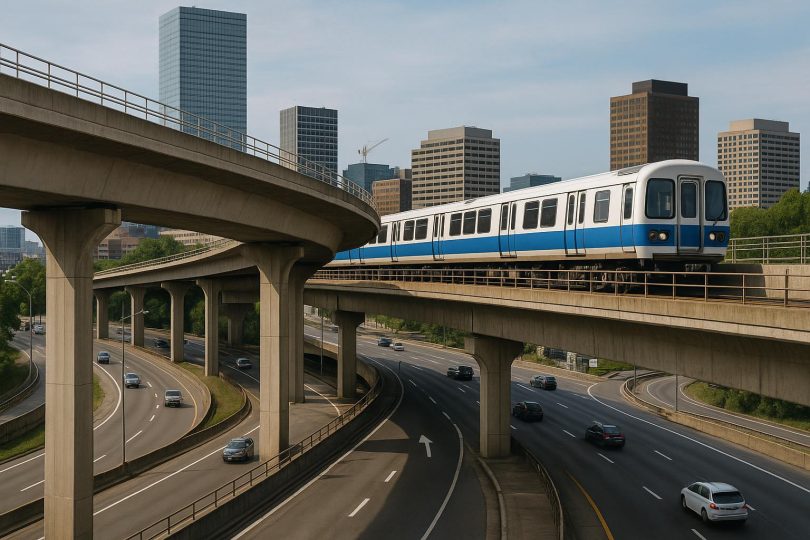
As more cities grow and grapple with pollution, overstretched road networks, and congestion, light rail transit has emerged as a viable strategy for redefining urban mobility. Modern light rail systems balance speed, cost efficiency, environmental sustainability, and capacity. These features have made them good alternatives to car-dependent planning models. From revitalizing neighborhoods to supporting climate goals, new light rail construction is continually changing how people move through cities and how cities ultimately achieve long-term development.
Light rail systems reduce dependence on cars by offering fast, high-frequency service that connects major commercial, residential, and employment hubs. Unlike buses, which often operate in mixed traffic, the right rail runs on dedicated tracks, enabling predictable travel times. Because they are quite reliable, light rails have grown in ridership, and commuters are shifting from cars to transit, helping reduce congestion and lower greenhouse gas emissions. According to the U.S Department of Transportation, rail transit produces fewer emissions per passenger.
Cities usually see increases in mixed-use housing, office construction, and retail within walking distance of new stations. This underscores that light rail construction plays a key role in shaping communities by encouraging transit-oriented development. This pattern often results in walkable neighborhoods, strengthens local economies, and reduces commuter parking demands. Properties near high-quality transit usually appreciate and attract more private investments. Light rail corridors usually stimulate development through predictable long-term transportation access.
Light rail systems strengthen equity by giving underserved communities reliable and affordable ways to travel. When cities design these systems with fairness in mind, they create direct connections to jobs, hospitals, schools, and essential services. Research shows that reliable transit significantly improves economic opportunity, and light rail helps close mobility gaps by offering faster, more consistent service than many bus routes. This improved access reduces transportation costs for low-income residents and supports long-term upward mobility.
As more people choose light rail over driving, cities see noticeable reductions in traffic congestion. With fewer cars on major corridors, travel becomes smoother and safer for everyone on the road. Light rail vehicles feature protected intersections, dedicated tracks, and modern signaling, enhancing safety for riders, cyclists, pedestrians, and drivers. These systems consistently rank among the safest forms of urban travel and help cities lower crash rates and improve overall roadway safety.
Light rail construction continues to spark technological advancement in urban infrastructure. New systems include energy-efficient propulsion, regenerative braking, and smart electrical components that reduce operating costs and strengthen reliability. Cities also design modern light rail networks to withstand climate challenges such as flooding, extreme heat, and seismic activity. This focus on resilience ensures that the system continues to operate even under difficult conditions and supports long-term sustainability in growing urban areas.
Beyond transportation, light rail construction plays a strong role in economic development. These projects create thousands of jobs in fields ranging from engineering and construction to operations and long-term maintenance. Once the system opens, nearby neighborhoods benefit from increased foot traffic, greater accessibility, and renewed business activity. Studies show that investment in public transit often yields returns 10 times its cost, making light rail a powerful driver of growth for cities that commit to building it.
About Barletta Engineering
Barletta Engineering is a family-owned construction company based in Canton, Massachusetts, now in its fourth generation of leadership. Through its two operating entities, the firm delivers water and wastewater facilities, energy infrastructure, commercial developments, and heavy civil projects such as bridges, airports, and public transportation systems. With nearly 100 professional employees, union labor partnerships, and more than 300 certified pieces of equipment, the company supports complex infrastructure delivery. Barletta Engineering has earned industry recognition for its project execution, including a national infrastructure award for transit work.