
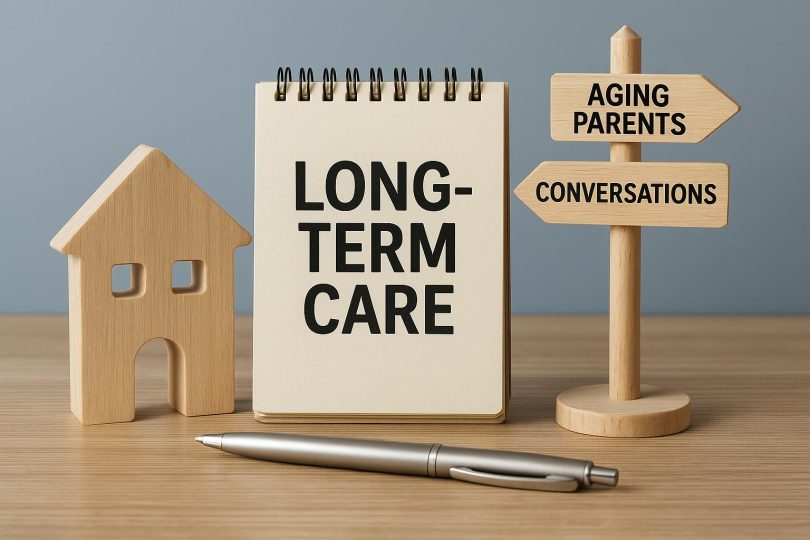
Navigating Conversations About Long-Term Care with Aging Parents
Christina Bakle is an experienced nurse and healthcare professional based in Arkadelphia, Arkansas, with a clinical background that spans home health, hospice, rehabilitation, medical clinics, and residential care settings. As a case manager for home health and hospice services at Baptist Health, Christina Bakle oversees care planning, coordinates with multidisciplinary teams, supervises aides, and helps educate patients and families about treatment options and comfort measures. Her career has included responsibilities such as patient assessment, diagnostic testing, medication administration, wound care, and care coordination. Through her work with patients facing complex health conditions and end-of-life care decisions, she has experience supporting families as they navigate important healthcare discussions. Conversations about long-term care are a significant part of planning for aging and future healthcare needs, making the topic relevant to patients, caregivers, and families alike.
Few conversations feel as delicate as talking with aging parents about long-term care. It touches independence, identity, and fears about decline, so it is not surprising that many families delay it until a crisis forces decisions. Evidence from gerontology and caregiving research suggests that earlier, ongoing conversations lead to better outcomes, including care that more closely reflects a person’s preferences and less stress for family members making decisions under pressure.
Timing matters. Rather than waiting for a fall, hospitalization, or cognitive change, it helps to raise the topic when things are relatively stable. Studies on advance care planning show that people are more open to discussing future care when they are not in immediate distress. Framing the conversation as planning, not reacting, can lower defensiveness and create a sense of shared understanding. You might start with a neutral entry point, such as a news story, a friend’s experience, or your own planning, then invite your parents’ perspective with genuine curiosity.
How you ask is as important as what you ask. Open-ended questions tend to work better than directives. Instead of “You need to move,” try “What would make you feel safe and comfortable if your needs changed?” This approach aligns with motivational interviewing techniques, which emphasize autonomy and collaboration. Listening without interrupting or correcting builds trust and emotional safety, even if you disagree with what you hear. Reflecting what your parent says can show that you understand, which makes it easier to discuss options later in a respectful, patient way.
It also helps to break a big topic into smaller, concrete pieces. Long-term care is not one decision but many, including where to live, what kind of help is acceptable, who should make decisions if needed, and how to pay for care.
Evidence shows that people are more likely to complete advance directives when conversations include specific scenarios and values, such as preferences about staying at home versus moving, or priorities like privacy, social connection, or proximity to family, all framed within realistic expectations.
Emotions will surface, and naming them can keep the conversation grounded. Aging parents may fear losing independence or becoming a burden. Adult children may feel guilt or anxiety about safety. Research on family caregiving suggests that acknowledging these feelings, rather than trying to argue them away, reduces conflict and improves follow-through. If tensions rise, it is reasonable to pause and revisit the discussion later with renewed patience.
Bringing in trusted professionals can add clarity. Primary care clinicians, social workers, and geriatric care managers can explain what different services involve and what is realistic given health conditions. Written materials or decision aids can also support understanding. Evidence-based tools for advanced care planning have been shown to increase documentation of preferences and improve communication within families, especially when paired with clear guidance.
Finally, treat this as an ongoing conversation, not a one-time decision. Preferences can change with health, finances, and life events. Revisiting the topic periodically keeps plans aligned with current needs and reduces the likelihood of rushed choices. While these conversations are not easy, they are a form of care in themselves, helping ensure that future decisions reflect what matters most to your parent and preserve a sense of dignity and control.
About Christina Bakle
Christina Bakle is a case manager for home health and hospice services at Baptist Health in Arkadelphia, Arkansas. She has extensive nursing experience across hospice, rehabilitation, clinical, and residential care settings, with expertise in patient assessment, care planning, medication administration, wound care, and family education. Christina Bakle earned a bachelor of science in nursing from Henderson State University and has been recognized for academic achievement and professional reliability throughout her healthcare career.